Wooden Handicrafts Exports from India | Wooden Handicrafts Exporters: Trade Horizon
A wooden product does not always need elaborate decoration to catch someone's attention. Sometimes the grain of the timber is enough. A hand carved surface can do the rest. Put a few well chosen wooden pieces together on a shop shelf and they can give the display a warmer, more lived in appearance than many factory made alternatives.
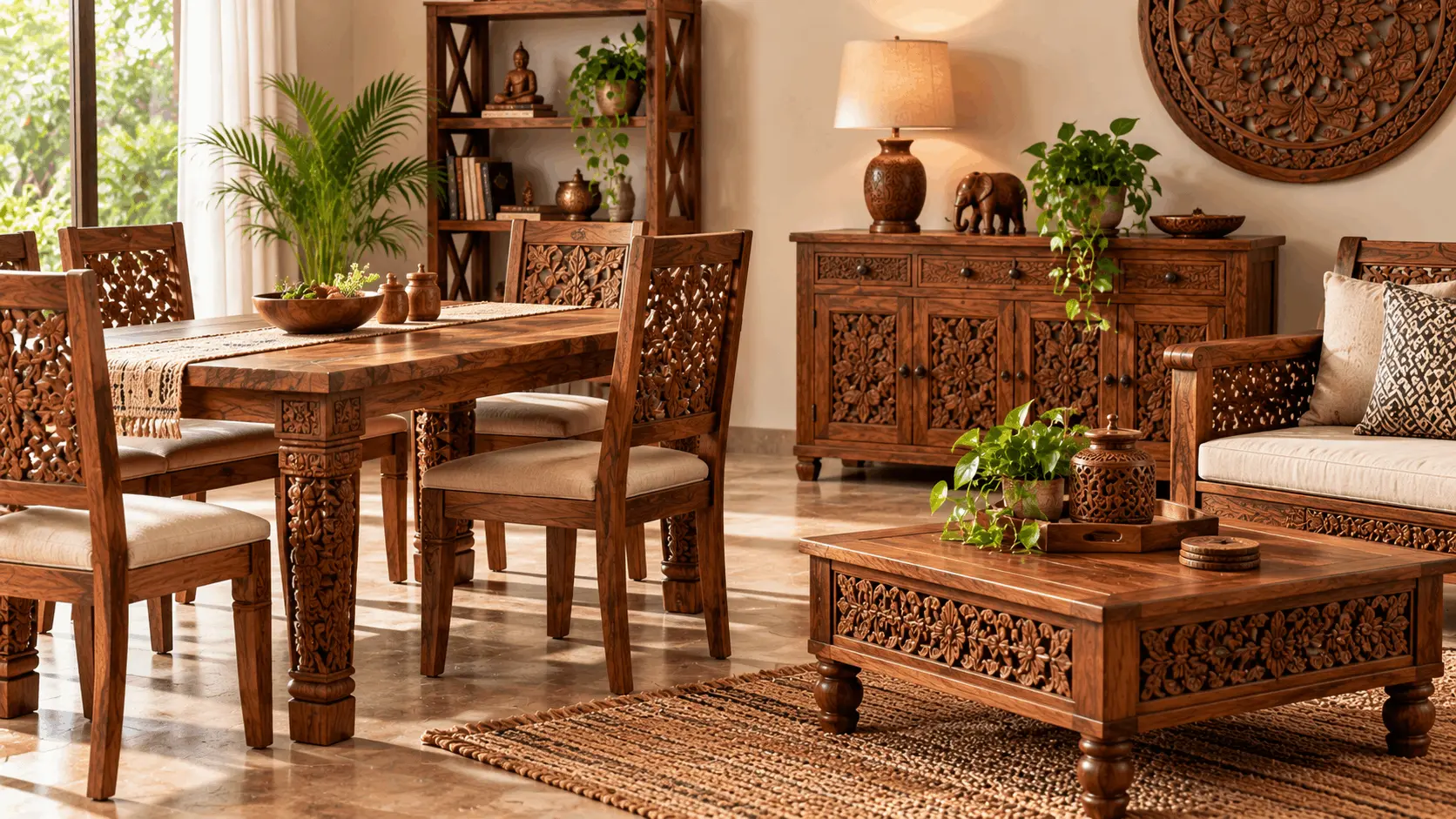
India has a particularly broad tradition of working with wood. Carving, painting, turning and inlay are used in different regions, often with styles that have developed over generations. Alongside traditional pieces, there are also wooden products made for contemporary homes, gift stores, hospitality spaces and everyday use.
For an overseas buyer, this creates an interesting range to work with. You are not limited to one particular type of product or one particular visual style.
Wooden Products for a Retail Collection
Imagine a small home décor shop. The owner may have room for decorative boxes, trays, bowls and a few smaller figurines. A larger retailer could be looking for an assortment covering several price points. A hotel, meanwhile, might need wooden accessories or decorative pieces for a number of rooms.
The same approach does not suit all three buyers.
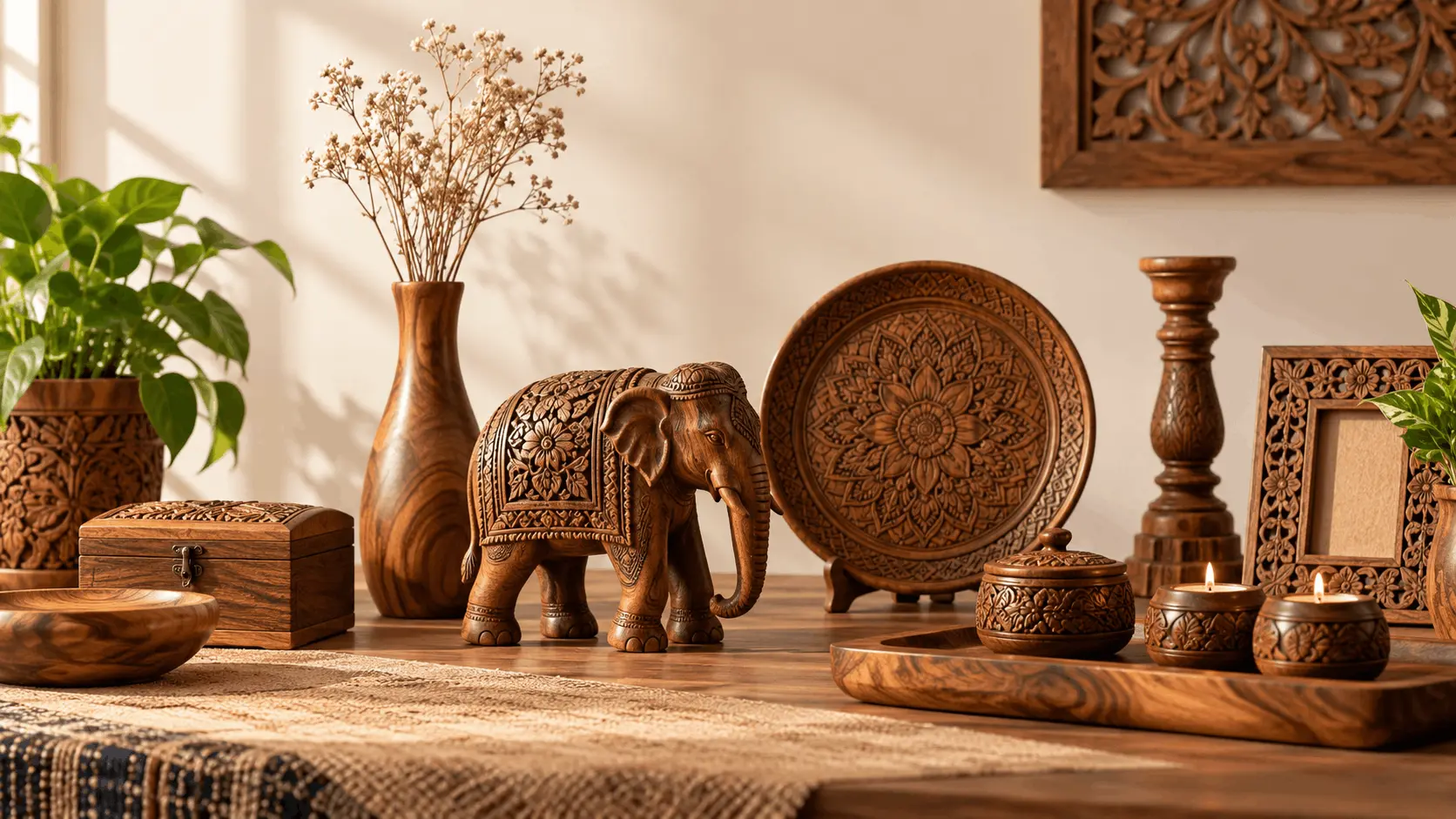
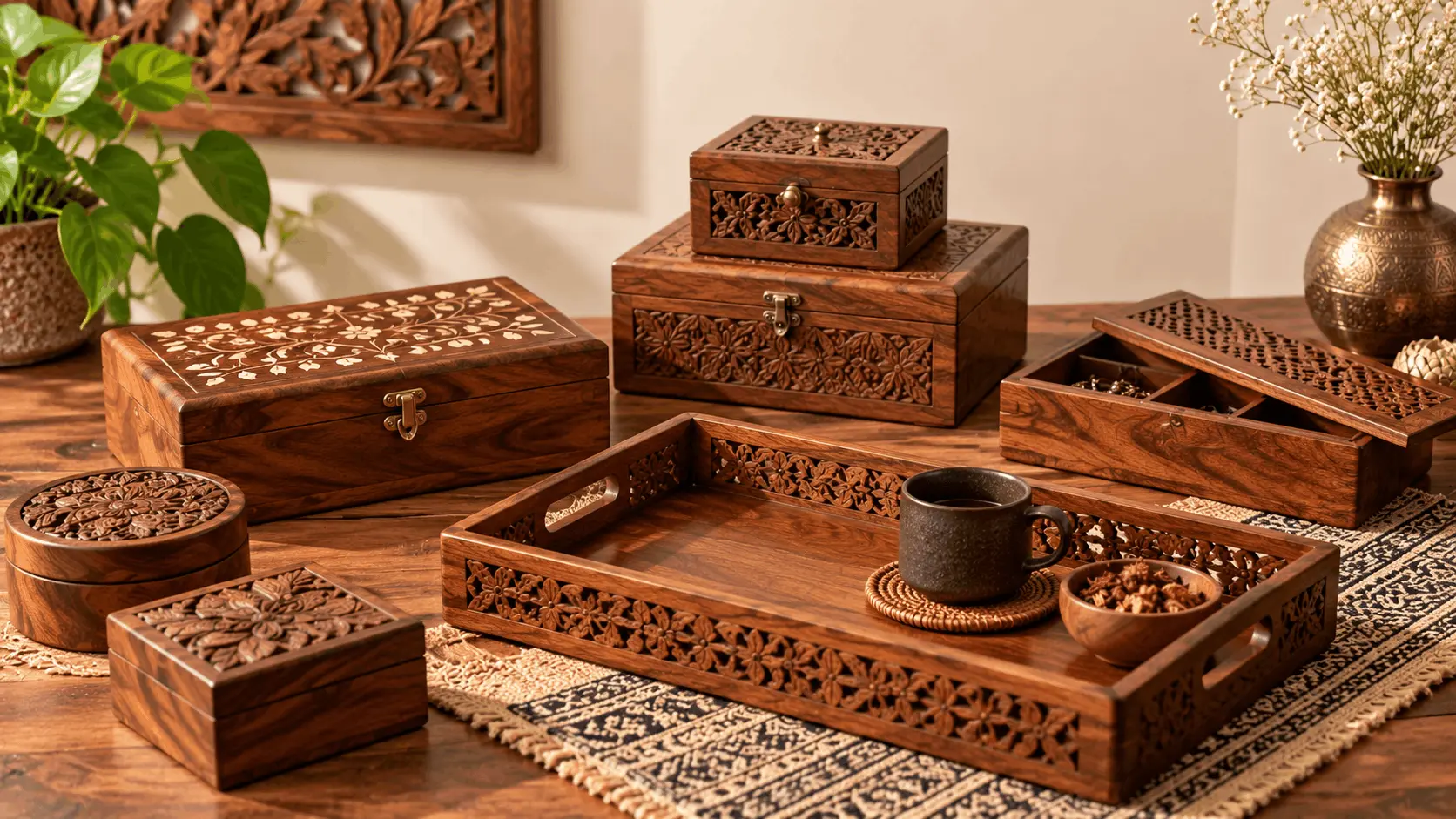
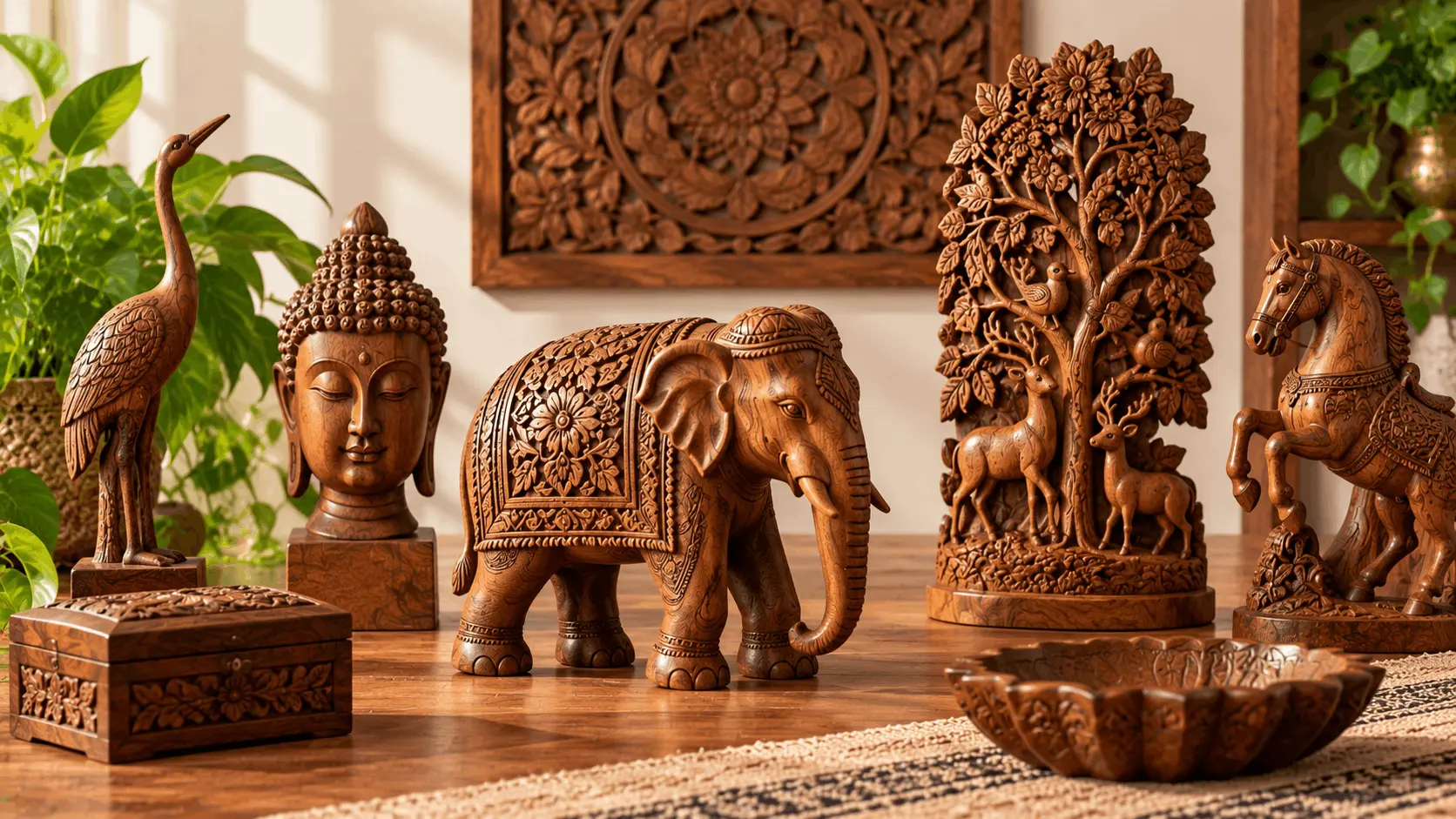
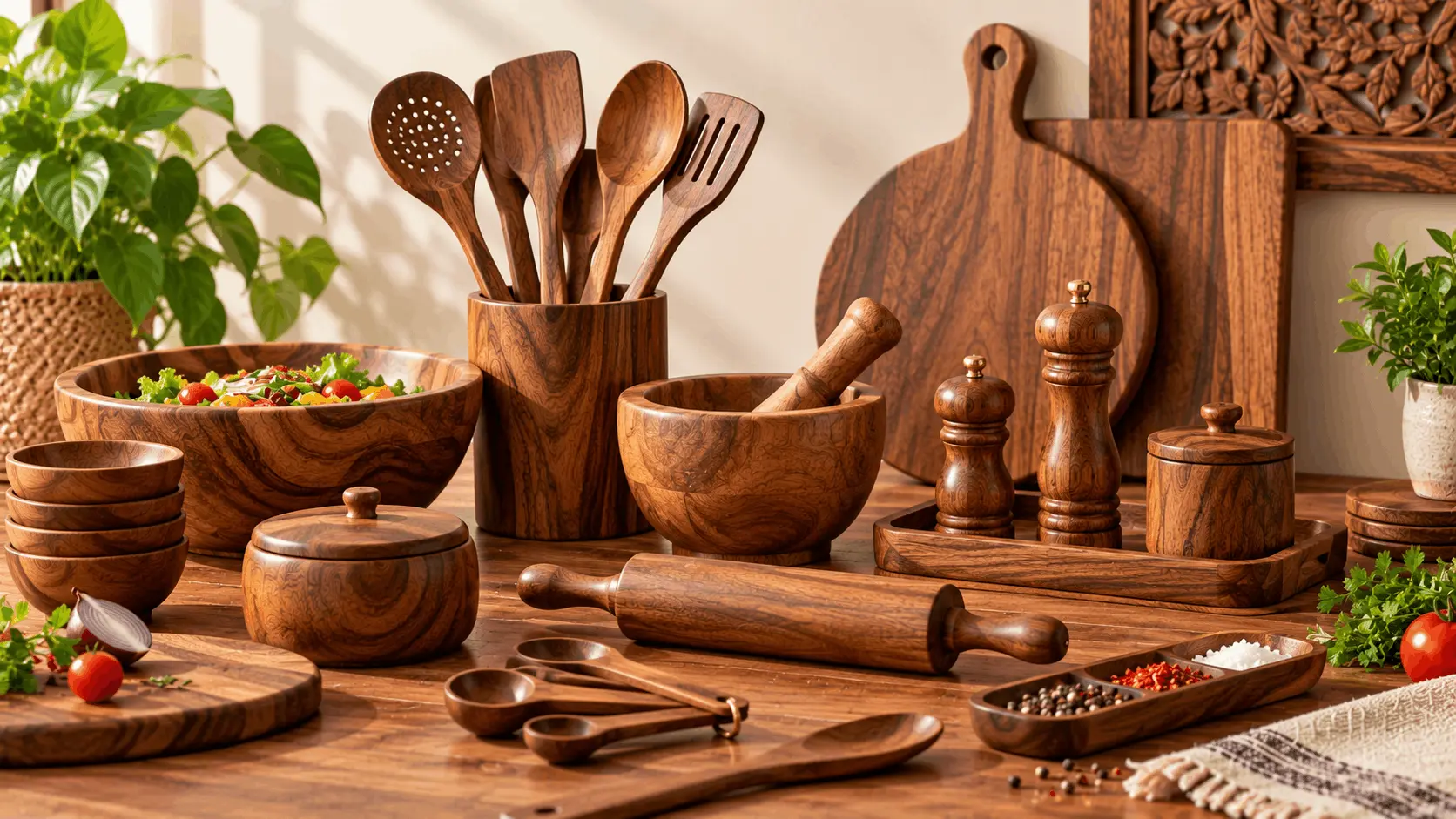
Wooden boxes can be useful for gift and lifestyle stores. Trays and bowls may fit naturally into homeware ranges. Carved animals, figures and sculptures can give a specialist shop something distinctive to display. Frames, wall pieces and other decorative articles offer another direction.
The useful question is not simply what can be made from wood. It is what your customer is likely to take home.
Wooden Handicrafts Exports from India
Wooden handicrafts exports from India form part of the country's wider woodware trade. Export Promotion Council for Handicrafts data records woodware exports of around Rs 7,160.96 crore in 2025 to 2026. The United States, Germany, the Netherlands, the United Kingdom, France and Australia were among the destination markets recorded by the council.
For someone planning an import order, however, a national export figure is only a starting point. It does not tell you whether a particular tray will sell in your store or whether the dimensions of a particular box will make sense once freight has been added.
Those decisions are much more specific.
A product needs the right appearance, price and size for the market. If it is likely to become a regular seller, the question of repeat production becomes important too.
The Character Comes from the Wood and the Craft
Two wooden articles can be made for the same purpose and still look nothing alike.
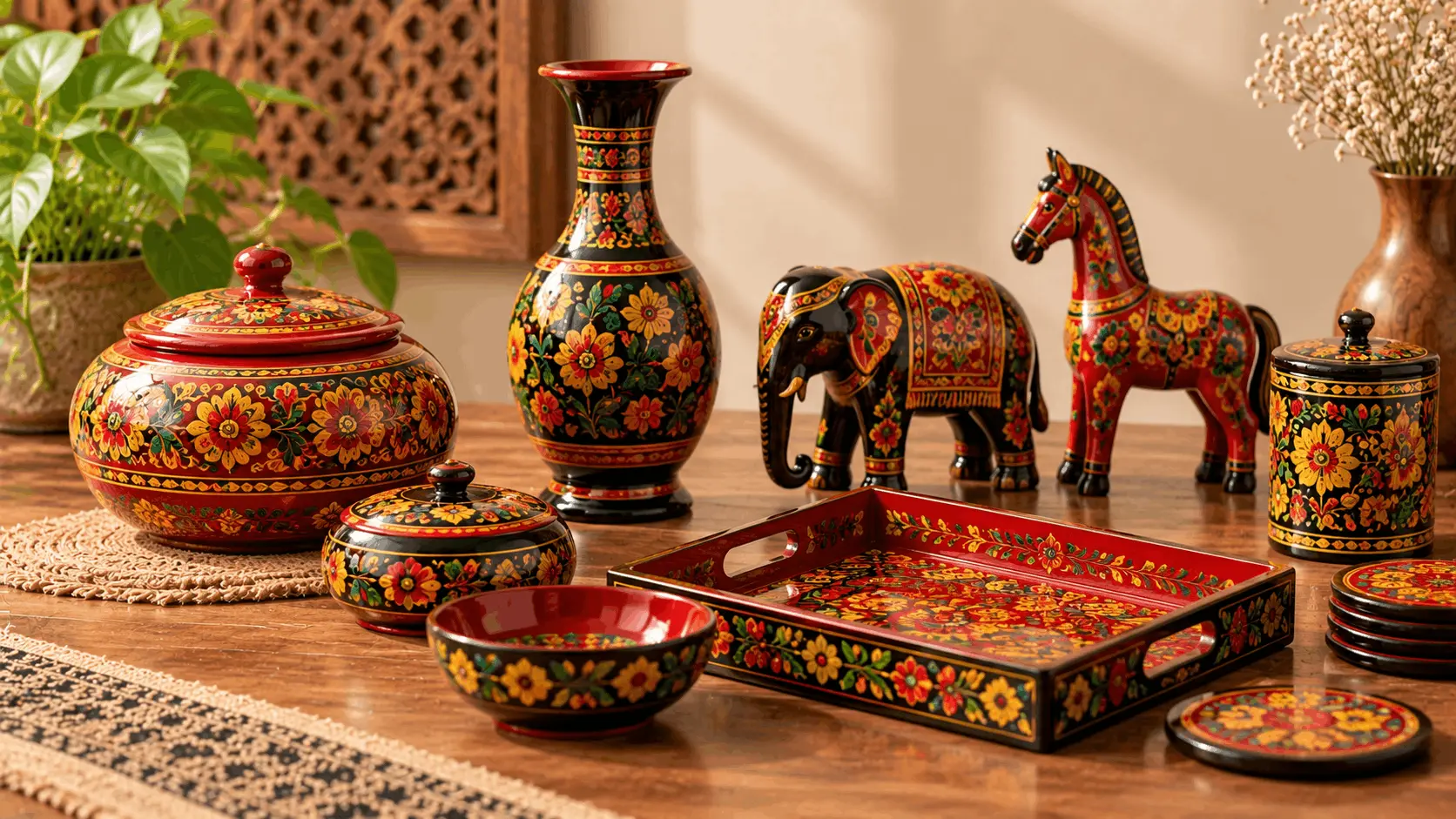
A carved box may have a fairly traditional appearance, while another may have a plain surface and a more contemporary shape. Paint changes the character again. So does an aged finish, visible grain or decorative inlay.
This gives buyers plenty of room to build a collection around a particular idea.
Someone selling traditional Indian décor may deliberately look for detailed carving and regional motifs. Another retailer may prefer uncomplicated shapes that sit comfortably alongside modern furniture. Neither choice is necessarily better. They simply appeal to different customers.
If you already have something similar to what you want, a photograph can be very helpful. It gives a supplier a visual reference for the shape, proportions and finish you have in mind.
Choosing Wooden Handicrafts Exporters in India
A buyer searching for wooden handicrafts exporters in India may already know exactly what needs to be produced. Perhaps there is an existing product that needs a new source. Perhaps a retail collection is being expanded. In some cases, there may only be a rough idea at the beginning.
That is fine.
The more information you have, the easier it becomes to narrow the enquiry. Quantity, dimensions, preferred wood, finish and intended use are all useful details. If you are working from a photograph, include that as well.
For buyers who are still deciding what to purchase, it helps to explain the business behind the enquiry. A gift wholesaler, online retailer and interior project will have different priorities. The right product is easier to identify when the supplier understands where it is going to be used or sold.
Do Not Treat Packaging as an Afterthought
Wooden articles can be sturdy, but that does not mean every wooden product is easy to ship.
A solid box may need relatively little protection compared with a carved figure containing thin or projecting parts. A large decorative piece can occupy considerable space even when its actual weight is modest. The packing method can therefore affect both protection and freight costs.
This is worth considering before confirming a product.
The final import cost is not just the supplier's quoted price. Packaging, freight, duties and other destination expenses can all have an effect on what the product eventually costs the buyer.
Check the Material Before Placing a Large Order
The type of wood can influence appearance, weight, price and how the finished article behaves over time. Grain can vary naturally, and the same finish may look slightly different from one piece to another.
There may also be destination specific requirements concerning timber and wooden products. Buyers should check the rules applicable to their own market, particularly where documentation, treatment, timber sourcing or environmental regulations are concerned.
It is much easier to resolve such questions before production than after a shipment has been packed.
Ask for a Sample
A photograph is useful. It is not the same thing as holding the product.
You may find that the article is heavier than expected. The colour might look different under natural light. Carving that seemed subtle on a screen could be quite pronounced in person. These are small discoveries, but they can change a buying decision.
A sample gives you the chance to examine the actual workmanship before committing to quantity. For a customised product, it also provides something concrete to discuss if changes are needed.
For new buyers especially, that extra step can prevent an expensive misunderstanding.
When One Order Becomes Several
A successful product can quickly become part of a retailer's regular range. At that point, sourcing is no longer only about finding a supplier who can make the first batch.
Can the same design be produced again? What quantity can be made at a time? How much notice is needed? Will the finish remain reasonably consistent?
These are sensible questions to ask early.
Handmade production also means that every piece may not look completely identical. Natural wood grain and individual workmanship can create small differences. That is often part of the appeal, but the buyer should still agree on what level of variation is acceptable.
A Practical Starting Point for Overseas Buyers
There is no need to arrive with a finished catalogue before beginning an enquiry.
You might have one photograph. You might know that you want carved wooden décor for a chain of stores. Or perhaps you are simply looking for products that would suit a particular customer group.
Trade Horizon helps international businesses explore wooden handicraft sourcing from India based on the actual requirement. Tell us what you are looking for, the approximate quantity and the market you are buying for. If there is a particular design, material or finish in mind, that can be discussed as part of the enquiry.
FAQs
What wooden handicrafts are available from India?
Indian suppliers offer a wide selection of wooden articles, including carved boxes, trays, bowls, figurines, sculptures, frames, wall décor, storage products and decorative accessories. The range differs between suppliers and craft regions.
Which countries import wooden handicrafts from India?
Indian woodware is sold across several overseas markets. EPCH data for 2025 to 2026 records the United States, Germany, the Netherlands, the United Kingdom, France and Australia among the destination markets for Indian woodware.
Can I buy wooden handicrafts in bulk from India?
Yes. Bulk and wholesale quantities can be discussed with suppliers according to the product and available production capacity. Giving an approximate quantity at the beginning usually makes the enquiry more useful.
Is it possible to receive a sample first?
A sample can often be requested, depending on the product and supplier. It allows a buyer to inspect the dimensions, weight, workmanship, finish and overall appearance before confirming a larger quantity.
Can a wooden handicraft be made to my specifications?
Customisation depends on the product and the supplier. Where possible, buyers can discuss requirements such as size, carving, finish, colour, packaging and branding.
Are there special requirements for importing wooden products?
There can be. Requirements vary according to the destination country and the type of wooden product. Buyers should check applicable rules concerning timber sourcing, treatment, documentation and environmental requirements before placing an order.
Will handmade wooden products have slight differences?
They can. Natural variations in wood grain, colour and handmade detailing are normal in many wooden handicrafts. If a buyer requires a high degree of consistency, this should be discussed and agreed before production.
How can I start sourcing wooden handicrafts from India?
You can begin with a product photograph, a description of what you need or an idea for a collection. It is helpful to include the approximate quantity and destination market. Trade Horizon helps international buyers explore suitable Indian sourcing possibilities based on these requirements.